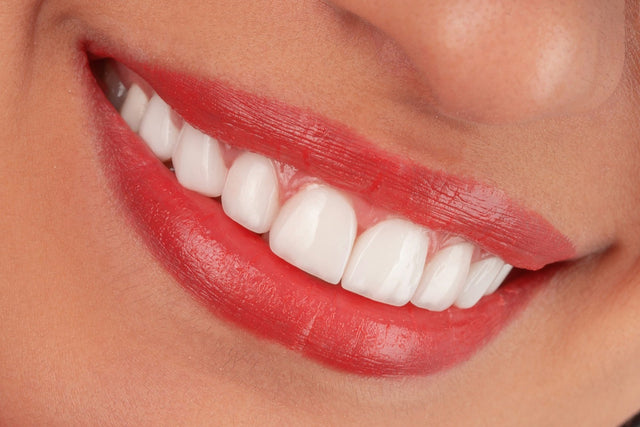
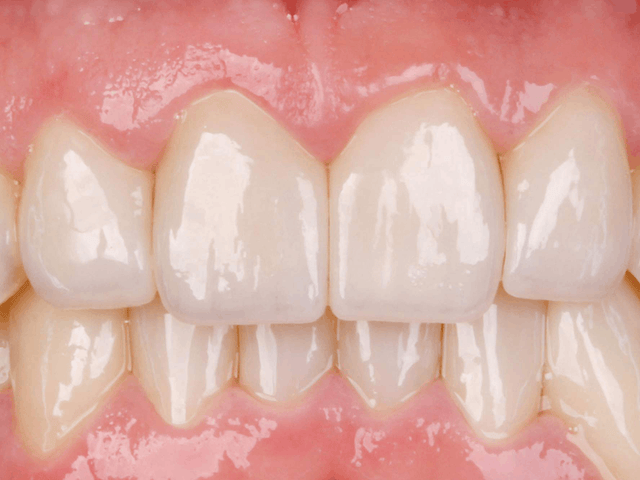
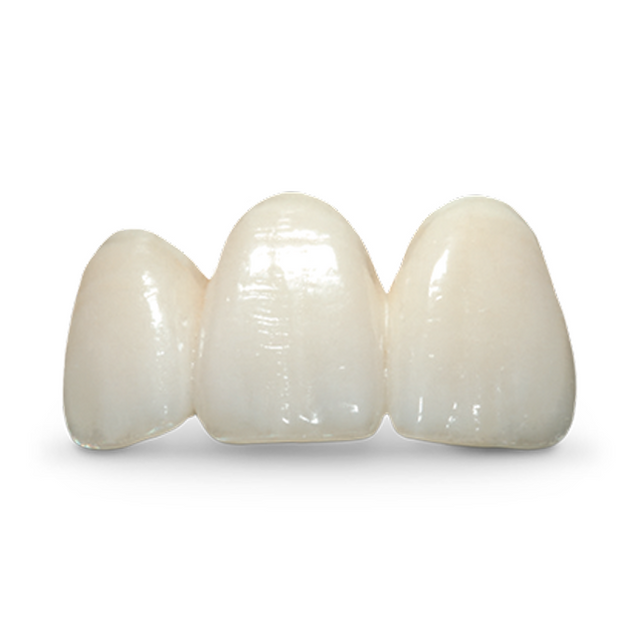
A patient wants whiter teeth before a wedding, and you have three decisions to make: which gel strength, how the tray should be designed, and what to do about the old composite on #8 and the crown on #9. Get them wrong and you hear about sensitivity in week one and a shade mismatch for years.
Custom-tray bleaching has been studied since 1989, so most of these choices now have trial data behind them. Below: gel strength, reservoirs, tray borders, relapse, bonding, regulation, and the records to send for trays.
Key Takeaways
- In a meta-analysis of 13 studies, 10% carbamide peroxide whitened as well as stronger carbamide gels, with lower odds of tooth sensitivity (odds ratio 0.41).
- A systematic review of 9 randomized trials found no evidence that tray reservoirs improve color change.
- Scalloped and non-scalloped borders were equivalent for gingival irritation in a 120-patient trial, and in another trial, trays extended 3 mm past the gingiva caused more examiner-detected irritation than trays extended 1 mm.
- Results usually last years: 82% of patients kept their result at a mean of 47 months after 10% carbamide peroxide, though more than 66% reported mild to moderate relapse at 2 years in another trial.
- In a lab study, composite bond strength to bleached enamel stayed low for two weeks and returned to control values after three.
- The EU limits dentist-supplied whitening products to 6% hydrogen peroxide; in the US, FDA has issued no classification for peroxide whiteners and denied an ADA petition to set one in 2014.
Quick Answer
Custom trays with 10% carbamide peroxide remain the best-studied at-home option: stronger gels reach about the same final shade but cause more sensitivity. Reservoirs and scalloped borders are optional: trials show no meaningful color benefit, and over-extended borders can irritate the gingiva. Results usually last years with some relapse. Restorations do not change color, so bleach first, wait before bonding, and match restorations to the new shade.
Why Is 10% Carbamide Peroxide the Reference Point?
Nightguard vital bleaching, introduced by Haywood and Heymann in 1989, used 10% carbamide peroxide in a custom-fitted tray; by 1997 Haywood described normal treatment time as one to two weeks, longer for difficult stains. According to the ADA, carbamide peroxide releases about one-third of its content as hydrogen peroxide, which can pass through enamel and dentin to the pulp within 15 minutes.
The ADA once accepted at-home bleaching agents: a 1997 JADA review recommended using an ADA-accepted at-home agent under a dentist's supervision. Today the ADA calls dentist-supplied whitening products professional products that are not eligible for the Seal. The Seal is now a voluntary program for over-the-counter products, and its first home-use bleaching Seals were awarded in 2017.
Long-term data on 10% carbamide peroxide are reassuring. In a University of North Carolina study, 98% of patients lightened and 82% kept the result at a mean of 47 months; 66% reported sensitivity or gingival irritation during treatment, none at the end. A follow-up 10 to 17 years later found no external cervical resorption, and 87% would whiten again.
Does a Stronger Gel Whiten More?
Not by the end of treatment: stronger gels can work faster in the first days, but final color is similar and sensitivity rises. The 2018 Cochrane review of 71 trials found sensitivity and oral irritation more common at higher concentrations, though mild and transient. The ADA says mild to moderate sensitivity can occur in up to two-thirds of users early in treatment.
| Comparison | Evidence | Color result | Tooth sensitivity |
|---|---|---|---|
| 10% vs 16% CP, 2 h a day for 3 weeks | Randomized trial, 92 patients | No significant difference; same median shade at 1 year | More with 16% in weeks 1 and 3 |
| 10% vs stronger CP gels | Meta-analysis, 13 studies | No significant difference | Lower risk with 10% (odds ratio 0.41) |
| CP 20 to 22% vs CP 10 to 11% | Network meta-analysis, 77 studies, 50 pooled | Not assessed | Risk about doubled with 20 to 22% (RR 2.0); mild on average |
| Tray CP vs tray HP | Meta-analysis, 8 low-risk randomized trials | Slightly better with CP by spectrophotometer; similar by shade guide | No difference |
| At-home vs in-office | Updated meta-analysis, 32 studies | Similar by shade guide; spectrophotometer favored at-home | Same risk (RR 0.82), lower intensity at home; low-quality evidence |
CP is carbamide peroxide, HP hydrogen peroxide, RR relative risk. The 2025 review advises prescribing the strongest gels with care and closer supervision.
Do Reservoirs in Bleaching Trays Help?
Reservoirs are block-out spacers on the facial surfaces of the model, so the tray holds more gel. The evidence is mixed and mostly says they are optional:
| Study design | Gel and regimen | Finding |
|---|---|---|
| 30 patients, reservoirs in one quadrant | 10% CP, two 2 h sessions a day, 10 days | No clinical shade difference |
| Reservoirs on one side of the arch | 15% CP, 2 h a day, 14 days | Colorimeter showed lighter teeth with reservoirs, below the visual threshold; no difference in sensitivity |
| 19 patients, reservoir on one side | 16% CP, 2 h a day, 21 days | More frequent and more intense gingival inflammation on the reservoir side right after treatment; no significant difference at 30 and 45 days |
| 46 patients, split-mouth | 10% CP, 3 h a day, 21 days | Equivalent color; pain reported by 33% vs 35% of patients on each side; same stability at 1 year |
A 2019 systematic review of 9 randomized trials found 4 with no color difference and 2 favoring reservoirs, and concluded there is no evidence that reservoirs improve color change. A 2026 review adds that more gel may mainly increase tissue exposure, cost and adverse effects.
Scalloped or Not, and How Far Should the Tray Extend?
Border shape
In a split-mouth trial of 120 patients using 10% hydrogen peroxide for 30 minutes a day, scalloped and non-scalloped borders were equivalent for gingival irritation and sensitivity, with color differences below the clinically noticeable threshold. The authors left scalloping to the clinician.
Border extension
How far the tray goes past the gingiva may matter more. In a 72-patient trial with 16% carbamide peroxide worn overnight, trays extended 3 mm past the gingival margin had more examiner-detected irritation than trays extended 1 mm, and more intense sensitivity, with no color difference; patient-reported irritation did not differ significantly. The ADA links gingival irritation mainly to poorly fitting trays or improper gel application.
We found little clinical research on tray thickness. One case report shows design can follow the patient: trimming a tray to the facial surfaces, incisal edges and buccal cusps restored tooth contact for a patient with TMJ pain, who then finished bleaching without symptoms.
How Long Do Results Last?
In the 92-patient Meireles trial, teeth were still lighter than baseline at 2 years, but more than 66% of patients in each group reported mild to moderate relapse, and the 16% gel did not outlast the 10% gel. In the UNC series, 43% perceived the shade as stable about 10 years later. Plan for touch-ups and tell patients to keep their trays.
How Long Should You Wait Before Bonding?
In a lab study of four home-bleaching gels, composite bond strength to enamel stayed low for two weeks after bleaching and returned to control values after three; higher concentration did not lengthen the wait (Cavalli et al., 2001).
Cvitko et al. found that 10% carbamide peroxide reduced the shear bond strength of composite to etched enamel, and that removing surface enamel restored it. A 2021 meta-analysis of 24 lab studies confirmed that at-home bleaching lowers immediate bond strength; antioxidants improved it, in studies at medium to high risk of bias. Ceramic is not exempt: in a 2023 lab study, e.max Press discs bonded 14 days after 15% carbamide peroxide, even after 0.5 mm of enamel reduction, had the lowest bond strength of all groups (5.39 MPa vs 15.71 MPa unbleached).
These are lab findings: they set a direction, not an exact day count. For the bonding steps, see our cementation and bonding guide.
Why Does Shade Planning Matter With Existing Restorations?
The ADA states that only natural teeth can be whitened, not tooth-colored restorations, and advises documenting existing restorations before bleaching and warning patients about the mismatch. That sets the sequence: bleach first, then make new restorations to the bleached shade.

For shade tab photos and stump shade, see Shade Matching: Photos and Stump Shade. If veneers will follow, our veneers guide compares e.max, zirconia and feldspathic options.
How Are Whitening Products Regulated?
United States
In 1991 FDA sent warning letters calling peroxide tooth whiteners unapproved new drugs. Den-Mat sued, then withdrew its case in 1992 after FDA agreed to review new information, and FDA says it has issued no determination on that product since. In 2014 FDA denied an ADA citizen petition asking for a classification, saying data were insufficient to decide whether peroxide whiteners as a group meet the definition of a drug. ADA policy holds that only licensed dentists or their supervised auxiliaries should make impressions for whitening trays.
European Union
Maximum hydrogen peroxide, present or released (carbamide peroxide included), in EU tooth whitening products; above 0.1% they may be sold only to dental practitioners, and each cycle's first use is by or under a dentist (Directive 2011/84/EU).
Commission Regulation (EU) No 344/2013 carried the same rule into the EU Cosmetics Regulation from 11 July 2013: no use under age 18, and the hydrogen peroxide percentage on the label. By the ADA's one-third rule, 6% hydrogen peroxide equals roughly 18% carbamide peroxide, so much of the 10% to 38% range the ADA describes for US at-home systems sits above the EU limit.
What Records Should You Send for Bleaching Trays?
- Arches: a complete scan or impression of every arch to be bleached, with clean gingival margins, since the border is trimmed to them (see How to Send a Scan to a Dental Lab).
- Rx: arch, border shape and extension, reservoirs or none, teeth to leave uncovered (see How to Fill Out a Dental Lab Rx).
- Restorations: note crowns, veneers and large composites that will not change color.
- Notes: sensitivity history, TMJ symptoms, planned restorations.

Bleaching Trays at Elegant Dental Laboratory
- Bleaching trays are part of our orthodontic appliances line, made in house in Brooklyn by more than 35 technicians, with no outsourcing.
- Digital scans are reviewed before production; we accept STL and PLY files from all major intraoral scanners (submit a digital case), or you can send a case by impression.
- When restorations follow the bleaching, we make IPS e.max veneers from 0.3 mm, crowns and onlays, plus zirconia and PFM.
- Our own drivers pick up and deliver free every business day during lab hours in all five New York City boroughs and 13 northern New Jersey counties; practices elsewhere can print a UPS label. Call 877-335-5221.
FAQ
Is 10% carbamide peroxide still the standard for tray bleaching?
It is the best-studied concentration; stronger carbamide gels reach a similar final shade with more sensitivity.
Do reservoirs make bleaching faster or better?
Not meaningfully. A systematic review of 9 trials found no evidence that they improve color change, and one trial linked them to more gingival inflammation.
How long should I wait to bond after bleaching?
Lab studies show reduced bond strength right after bleaching; in one, it recovered after three weeks.
Will bleaching change the color of crowns or veneers?
No. Only natural teeth whiten, so bleach first and make restorations to the new shade.
Can teenagers use whitening trays?
In the EU, products above 0.1% hydrogen peroxide are barred under 18. The American Academy of Pediatric Dentistry discourages full-arch cosmetic bleaching in the primary and mixed dentition.
Has FDA approved whitening gels?
FDA has issued no classification for peroxide whiteners as a group. In 2014 it denied the ADA's petition to set one, saying the data were insufficient.
Sources (34)
- American Dental Association, Research Services and Scientific Information. Whitening (Oral Health Topics). Last updated August 16, 2022. ada.org
- Haywood VB, Heymann HO. Nightguard vital bleaching. Quintessence Int. 1989;20(3):173-176. PubMed 2762507
- Haywood VB. Nightguard vital bleaching: current concepts and research. J Am Dent Assoc. 1997;128 Suppl:19S-25S. doi:10.14219/jada.archive.1997.0416
- Li Y. Toxicological considerations of tooth bleaching using peroxide-containing agents. J Am Dent Assoc. 1997;128 Suppl:31S-36S. doi:10.14219/jada.archive.1997.0420
- American Dental Association. ADA Seal of Acceptance Timeline. ADA News, November 2021. pages.ada.org
- Leonard RH Jr, et al. Nightguard vital bleaching: a long-term study on efficacy, shade retention, side effects, and patients' perceptions. J Esthet Restor Dent. 2001;13(6):357-369. doi:10.1111/j.1708-8240.2001.tb01021.x
- Ritter AV, et al. Safety and stability of nightguard vital bleaching: 9 to 12 years post-treatment. J Esthet Restor Dent. 2002;14(5):275-285. doi:10.1111/j.1708-8240.2002.tb00523.x
- Boushell LW, et al. Nightguard vital bleaching: side effects and patient satisfaction 10 to 17 years post-treatment. J Esthet Restor Dent. 2012;24(3):211-219. doi:10.1111/j.1708-8240.2011.00479.x
- Eachempati P, et al. Home-based chemically-induced whitening (bleaching) of teeth in adults. Cochrane Database Syst Rev. 2018;12:CD006202. doi:10.1002/14651858.CD006202.pub2
- Meireles SS, et al. Efficacy and safety of 10% and 16% carbamide peroxide tooth-whitening gels: a randomized clinical trial. Oper Dent. 2008;33(6):606-612. doi:10.2341/07-150
- Meireles SS, et al. A double-blind randomized controlled clinical trial of 10 percent versus 16 percent carbamide peroxide tooth-bleaching agents: one-year follow-up. J Am Dent Assoc. 2009;140(9):1109-1117. doi:10.14219/jada.archive.2009.0337
- Meireles SS, et al. A double-blind randomized clinical trial of two carbamide peroxide tooth bleaching agents: 2-year follow-up. J Dent. 2010;38(12):956-963. doi:10.1016/j.jdent.2010.08.003
- de Geus JL, et al. At-home bleaching with 10% vs more concentrated carbamide peroxide gels: a systematic review and meta-analysis. Oper Dent. 2018;43(4):E210-E222. doi:10.2341/17-222-L
- Terra RMO, et al. Effect of at-home bleaching agents and concentrations on tooth sensitivity: a systematic review and network meta-analysis. J Dent. 2025;160:105891. doi:10.1016/j.jdent.2025.105891
- Luque-Martinez I, et al. Comparison of efficacy of tray-delivered carbamide and hydrogen peroxide for at-home bleaching: a systematic review and meta-analysis. Clin Oral Investig. 2016;20(7):1419-1433. doi:10.1007/s00784-016-1863-7
- de Geus JL, et al. At-home vs in-office bleaching: an updated systematic review and meta-analysis. Oper Dent. 2025;50(4):E47-E69. doi:10.2341/24-078-LIT
- Javaheri DS, Janis JN. The efficacy of reservoirs in bleaching trays. Oper Dent. 2000;25(3):149-151. PubMed 11203808
- Matis BA, et al. A clinical evaluation of a bleaching agent used with and without reservoirs. Oper Dent. 2002;27(1):5-11. PubMed 11817468
- Kirsten GA, et al. Effect of reservoirs on gingival inflammation after home dental bleaching. Quintessence Int. 2009;40(3):195-202. PubMed 19417883
- Martini EC, et al. Evaluation of reservoirs in bleaching trays for at-home bleaching: a split-mouth single-blind randomized controlled equivalence trial. J Appl Oral Sci. 2020;28:e20200332. doi:10.1590/1678-7757-2020-0332
- Martini EC, et al. One-year follow-up evaluation of reservoirs in bleaching trays for at-home bleaching. J Esthet Restor Dent. 2021;33(7):992-998. doi:10.1111/jerd.12797
- Martini EC, et al. Does the use of reservoirs have any impact on the efficacy of at-home bleaching? A systematic review. Braz Dent J. 2019;30(3):285-294. doi:10.1590/0103-6440201902422
- Reis A, et al. Clinical myths in dental bleaching: an evidence-based structured narrative review. Braz Oral Res. 2026;40(suppl 1):e062. doi:10.1590/1807-3107bor-2026.vol40suppl1062
- Carneiro TS, et al. Gingival irritation in patients submitted to at-home bleaching with different cutouts of the bleaching tray: a randomized, single-blind clinical trial. Clin Oral Investig. 2022;26(6):4381-4390. doi:10.1007/s00784-022-04401-4
- Pereira-Lores P, et al. Does the use of a 3-mm extended tray during an at-home bleaching treatment increase gingival irritation? A randomized clinical trial. J Prosthet Dent. 2025;133(5):1277-1283 (corrigendum 2026;135(6):1149). doi:10.1016/j.prosdent.2024.09.029
- Oliver TL, Haywood VB. Efficacy of nightguard vital bleaching technique beyond the borders of a shortened tray. J Esthet Dent. 1999;11(2):95-102. doi:10.1111/j.1708-8240.1999.tb00383.x
- Robinson FG, Haywood VB. Bleaching and temporomandibular disorder using a half tray design: a clinical report. J Prosthet Dent. 2000;83(5):501-503. doi:10.1016/s0022-3913(00)70003-5
- Cavalli V, et al. The effect of elapsed time following bleaching on enamel bond strength of resin composite. Oper Dent. 2001;26(6):597-602. PubMed 11699184
- Cvitko E, et al. Bond strength of composite resin to enamel bleached with carbamide peroxide. J Esthet Dent. 1991;3(3):100-102. doi:10.1111/j.1708-8240.1991.tb00976.x
- Rodríguez-Barragué J, et al. Natural antioxidants to restore immediate bond strength to bleached enamel: systematic review and meta-analysis of in vitro studies. J Esthet Restor Dent. 2021;33(5):702-712. doi:10.1111/jerd.12743
- Arshad M, Vaziri N, Habibzadeh S. Effect of internal, office, and home bleaching on shear bond strength of enamel to porcelain laminate veneers. Int J Prosthodont. 2023;36(3):323-330. doi:10.11607/ijp.7773
- US Food and Drug Administration, Center for Drug Evaluation and Research. Response to the American Dental Association citizen petition, Docket FDA-2009-P-0566, April 22, 2014. PDF
- Council Directive 2011/84/EU of 20 September 2011 amending Directive 76/768/EEC, concerning cosmetic products, for the purpose of adapting Annex III thereto to technical progress. Official Journal of the European Union L 283, 29.10.2011, p. 36. EUR-Lex
- Commission Regulation (EU) No 344/2013 of 4 April 2013 amending Annexes II, III, V and VI to Regulation (EC) No 1223/2009 on cosmetic products. Official Journal of the European Union L 114, 25.4.2013, p. 1. EUR-Lex
Reviewed by Gary Fingerman, founder and CEO of Elegant Dental Laboratory, Brooklyn, New York (founded 2007). Last reviewed: October 1, 2026. Study values are from published research and regulatory documents; follow the instructions for use of the whitening gel you prescribe.