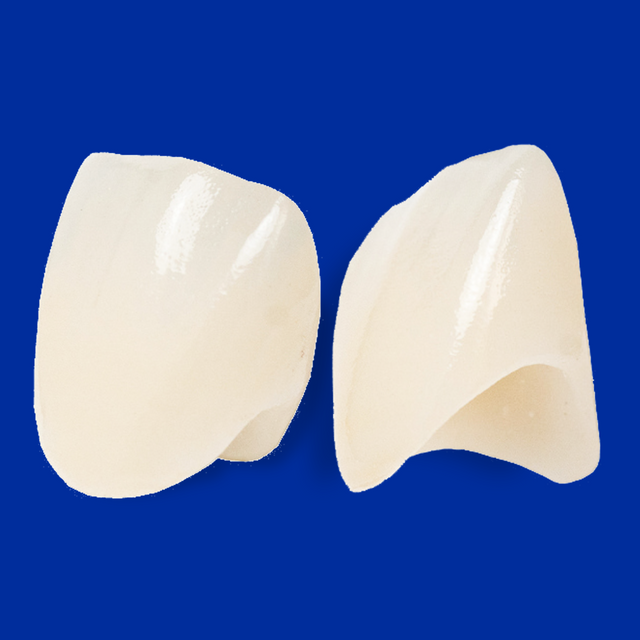
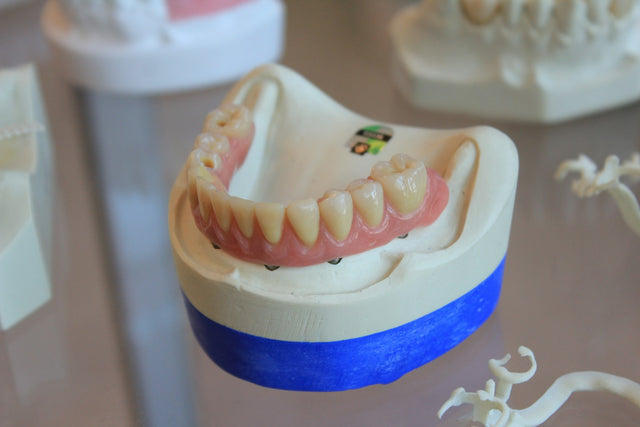
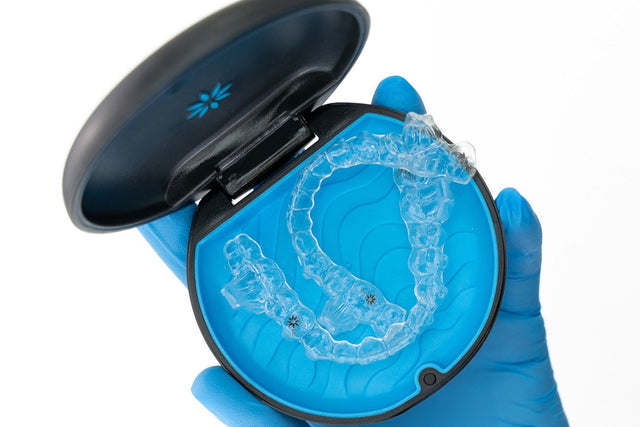
One patient asks for "the flexible one with no metal." Another has two free-end saddles and a tight budget. A third needs teeth while implants heal. All three need a partial denture, and the material should follow the support each mouth can give.
Below: where flexible, cast metal and acrylic partials fit by Kennedy class, what trials and reviews show for each, where digital frameworks stand, and the design details and records the lab needs on the Rx.
Key Takeaways
- A meta-analysis of 46 studies found 95.1% five-year survival for cast-clasp partials; abutment teeth had higher odds of extraction (odds ratio 1.99).
- A 2025 review of 7 randomized trials and 1 other study found flexible dentures may improve esthetics and satisfaction but may be inferior for retention; follow-up was too short to judge durability.
- In a 24-patient crossover trial, 75% were more satisfied overall and 83% preferred the appearance of thermoplastic partials over metal-clasp partials.
- The Japan Prosthodontic Society does not recommend flexible partials without a metal framework as definitive dentures, except in limited cases such as metal allergy.
- Across 10 randomized trials, cast frameworks fit slightly better than digitally made ones (standardized mean difference 0.49), though both fit acceptably.
- For the Rx: occlusal rest seats 1 to 1.5 mm deep, 0.01 inch undercut for cast clasps, 0.02 inch for wrought wire.
Quick Answer
Choose a cast cobalt-chromium partial as the definitive prosthesis, especially for Kennedy Class I and II free-end cases: rests give tooth support, a rigid major connector spreads load, and long-term survival is documented. Reserve a flexible partial for short tooth-bounded spans, metal allergy or patients who refuse metal clasps, and accept weaker retention and lab-only relines. Use an acrylic partial as an interim prosthesis during healing or before definitive treatment.
How Does Kennedy Class Steer the Choice?
Kennedy's system has four classes: Class I, bilateral edentulous areas posterior to all remaining teeth; Class II, one such area on one side; Class III, a unilateral area bounded by natural teeth in front and behind; Class IV, a single area crossing the midline, anterior to the remaining teeth. Applegate's rules keep it consistent: classify after planned extractions, let the most posterior edentulous area set the class, count other spaces as modifications, and give Class IV none (Loney, Dalhousie RPD Manual).
The class decides support. Class III and IV partials are tooth-borne. Class I and II are tooth- and tissue-borne: the saddle moves under load, so they usually need indirect retainers, mesial rests on terminal abutments, and an altered cast impression for mandibular distal extensions. Cast frameworks suit every class, flexible partials short bounded spans, acrylic interim use. If a fixed option is still possible, see Bridge vs. Implant Crown.
What Does the Evidence Say About Flexible Partials?
"Flexible partial" usually means a polyamide (nylon) base with resin clasps; trials also use other thermoplastics. The Japan Prosthodontic Society splits these non-metal clasp dentures into flexible designs without a metal framework and rigid designs with one, and says both follow conventional design principles (Fueki et al., 2014, Part I).

Satisfaction and esthetics
In a randomized crossover trial, patients wore metal-clasp and thermoplastic partials for 3 months each; of 24 who finished, 75% were more satisfied overall and 83% preferred the thermoplastic partial's appearance (Fueki et al., 2020). Quality of life was better by 9 OHIP points, above the 6-point minimal important difference (Fueki et al., 2017).
Retention
Retention is the weak point, rated possibly inferior by Canada's Drug Agency. In a study of 120 older patients, polyamide partial wearers reported more retention loss after 1 year, plus harder cleaning and a rougher surface; the authors suggested polyamide for non-extensive bounded spaces without heavy chewing loads (Manzon et al., 2019). For one polyamide resin, a lab study found clasps needed more than 0.5 mm of undercut and 1.0 mm of thickness (Osada et al., 2013); a cast clasp uses 0.01 inch, about 0.25 mm.
Periodontal effects
In a 3-month randomized crossover trial covering 55 abutment teeth, plaque, gingival index, probing depth and mobility did not differ between thermoplastic and metal-clasp partials (Fueki et al., 2022). Long-term data are missing, and a narrative review warns these dentures can traumatize supporting tissues and should be prescribed with caution when not used temporarily (Mendoza-Carrasco et al., 2020).
Relines, repairs and staining
That review also notes they need laboratory relining, grinding and polishing. In a lab study, untreated polyamide bonded worst to autopolymerizing acrylic; only hydrofluoric acid, silica coating and silane brought it to the level of PMMA (İşisağ, 2024). Thermoplastics generally have lower color stability and higher fracture risk than PMMA (Fueki et al., 2014, Part II), and polyamide can stain noticeably (Takabayashi, 2010). In the 120-patient study, 2 polyamide partials discolored within the year.
Why Is Cast Cobalt-Chromium Still the Standard?
Rests keep the base from sinking into the tissue and direct load along the abutment's long axis; a rigid major connector makes the partial work as one unit and spreads load across the arch (Loney).
Five-year survival of cast-clasp partials in a meta-analysis of 46 studies; probing depth and mobility of remaining teeth were unchanged, while the gingival index rose (Drummond et al., 2025).
Survival depends on how failure is defined
In a cohort of 886 metal-frame partials, 75% were still worn and not replaced at 5 years and 50% at 10; counting abutment retreatment as failure, 40% of conventional designs reached 5 years (Vermeulen et al., 1996). With hygiene instruction, periodontal therapy and yearly recall, 27 patients showed no significant periodontal deterioration over 10 years (Bergman et al., 1982); in a 10-year study without regular recall, probing depths and mobility worsened, most on clasp-retained abutments (Kern and Wagner, 2001).

When Is an Acrylic Partial the Right Call?
As an interim prosthesis, giving esthetics and function before and during fabrication of the final one (Zhang et al., 2009). Loney's manual lists healing after extractions or surgery, implant healing, growing arches, and temporary time or financial limits. Design still matters: wrought wire clasps in 0.02 inch undercuts, wire or embedded cast rests, full palatal coverage for strength, and extension to at least the first molar.
For complete dentures placed on the day of extraction, see Immediate Dentures: Records, Surgery Day and the First Year of Relines.
In a 12-month study of 40 patients, acrylic partial wearers had more bleeding on probing at abutments and metal-framework wearers more plaque; the authors found no significant overall periodontal impact (Bukleta et al., 2023).

Flexible vs. Cast Metal vs. Acrylic at a Glance
| Feature | Flexible | Cast cobalt-chromium | Acrylic |
|---|---|---|---|
| Support | No framework, or rigid type with one | Rests, rigid major connector | Tissue, plus wire or cast rests |
| Retention | May be inferior; loss reported at 1 year | Cast clasps, 0.01 inch undercut | Wire clasps, 0.02 inch undercut |
| Satisfaction | Higher in crossover trials | Lower appearance ratings | More bulk and speech complaints in one cohort |
| Periodontal | No difference from metal clasps at 3 months | Mobility and probing depth stable long term | More bleeding on probing at 12 months |
| Relines, repairs | Lab only; bonds poorly to acrylic | Framework adjusted, base relined | Repairs with autopolymerizing acrylic |
| Color | Lower stability than PMMA; staining | Clasps can show metal | PMMA reference |
| Long-term data | None on durability | 95.1% at 5 years | Interim by design |
Are Milled, Printed and Laser-Melted Frameworks Ready?
They are emerging: cobalt-chromium made by laser melting or sintering, and milled or injected PEEK, in small, short trials.
| Approach | What studies show |
|---|---|
| Digital metal vs. cast | 10 randomized trials: cast fit slightly better, both acceptable; higher satisfaction with digital in 2 studies |
| Patient-reported outcomes | 4 studies, 118 partials: better speech, cleanability and stability with digital; overall satisfaction similar |
| Laser-melted cobalt-chromium | Meta-analysis of 5 studies: conventional casting fit better |
| Laser-sintered pilot | 12-patient crossover: higher satisfaction; 5 preferred laser-sintered, 1 cast, 3 neither |
| PEEK frameworks | 26-patient crossover: no difference over 1 year; 12-patient crossover: chewing and stability better with cobalt-chromium |
| Polymer clasps | 8 studies: cobalt-chromium retained best; PEEK 1.5 mm thick in 0.5 mm undercut judged suitable |
What Should the Rx Say About Design?
The dentist owns the design: Loney's manual says the lab should never change a framework design without consulting the dentist, and errors from inaccurate drawings or missing instructions are the dentist's. Yet in a Turkish study of lab prescriptions, about two thirds of dentists sent no design information (Cebeci, 2018).
Survey first
Before preparing any tooth, survey the diagnostic cast: choose the path of insertion, locate guide planes and heights of contour, gauge the undercuts, and tripod the cast so its orientation can be reproduced (Davenport et al., 2000; Loney).
Rests
Occlusal rest seats: a rounded triangle about one third of the buccolingual width, 1 to 1.5 mm deep at a lowered marginal ridge, floor inclined so rest and minor connector meet at less than 90 degrees. Cingulum rest seats at least 1 mm deep, built up with composite if the cingulum is flat (Loney).
Clasps, connectors, indirect retention
Name the clasp and undercut: cast circumferential for tooth-borne cases, RPI or RPA for free-end abutments. For rigidity, the manual favors half-pear or half-round bars with more bulk on long spans, and never a horseshoe palatal connector for Class I or II. In a lab test, the anteroposterior palatal bar was the most rigid maxillary design and the U-shape the most flexible (Ben-Ur et al., 1999). Place indirect retainers for Class I and II perpendicular to the fulcrum line, as far from the primary abutments as possible.
What Records Should You Send?
- Final impression after rest seats and guide planes are cut, including retromolar pads or hamular notches for distal extensions.
- Opposing arch and bite: an elastomeric record if the casts rock, wax rims on the framework if no posterior teeth occlude.
- The designed cast or drawing, plus shade, mould and occlusal scheme; for interim partials, mark teeth to be extracted.
- A framework try-in and, for mandibular free-end saddles, an altered cast impression (Loney).
More in How to Fill Out a Dental Lab Rx and Disinfecting and Shipping Impressions.
Partials at Elegant Dental Laboratory
- Flexible and cast metal partials are made in house at our full-service lab at 2308 McDonald Ave, Brooklyn, by more than 35 technicians, with no outsourcing, and carry a 60-day warranty (policies and warranties). See dentures and removables.
- Send a case: our own drivers pick up and deliver free every business day in all five New York City boroughs and 13 northern New Jersey counties, and UPS labels work anywhere. Call 877-335-5221.
For how removable prosthetics evolved, see Dentures Then and Now.
FAQ
Is a flexible partial a definitive prosthesis?
It can be for short bounded spans or metal allergy. Otherwise the Japan Prosthodontic Society does not recommend designs without a metal framework, and suggests the rigid type, with a framework, for patients who refuse metal clasps.
Can a flexible partial be relined or repaired?
Yes, in the lab. Polyamide bonds poorly to acrylic without special surface treatment.
How long does a cast partial last?
A meta-analysis found 95.1% five-year survival; in one cohort, half were still worn at 10 years. Recall matters.
Is PEEK ready to replace cobalt-chromium?
Not yet proven: small crossover trials disagree.
When is an acrylic partial appropriate?
As an interim prosthesis: during healing, in growing patients, or before the definitive partial.
Sources (30)
- Canada's Drug Agency (CADTH). Flexible Dentures for Edentulism: Health Technologies. Report No. RC1583. Ottawa; 2025 Nov. PubMed 41499568
- Fueki K, et al. Clinical application of removable partial dentures using thermoplastic resin. Part I: Definition and indication of non-metal clasp dentures. J Prosthodont Res. 2014;58(1):3-10. doi:10.1016/j.jpor.2013.12.002
- Fueki K, et al. Clinical application of removable partial dentures using thermoplastic resin. Part II: Material properties and clinical features of non-metal clasp dentures. J Prosthodont Res. 2014;58(2):71-84. doi:10.1016/j.jpor.2014.03.002
- Fueki K, et al. Patient satisfaction and preference with thermoplastic resin removable partial dentures: a randomised cross-over trial. J Prosthodont Res. 2020;64(1):20-25. doi:10.1016/j.jpor.2019.05.003
- Fueki K, Yoshida-Kohno E, Wakabayashi N. Oral health-related quality of life in patients with non-metal clasp dentures: a randomised cross-over trial. J Oral Rehabil. 2017;44(5):405-413. doi:10.1111/joor.12494
- Manzon L, et al. Patient and Clinical Evaluation of Traditional Metal and Polyamide Removable Partial Dentures in an Elderly Cohort. J Prosthodont. 2019;28(8):868-875. doi:10.1111/jopr.13102
- Osada H, et al. Influence of thickness and undercut of thermoplastic resin clasps on retentive force. Dent Mater J. 2013;32(3):381-389. doi:10.4012/dmj.2012-284
- Fueki K, et al. Short-term effect of thermoplastic resin removable partial dentures on periodontal health: A randomized cross-over trial. J Prosthodont Res. 2022;66(1):167-175. doi:10.2186/jpr.JPR_D_20_00317
- Mendoza-Carrasco I, et al. Nonmetal clasp dentures: What is the evidence about their use? J Indian Prosthodont Soc. 2020;20(3):278-284. doi:10.4103/jips.jips_459_19
- İşisağ Ö. The effect of hydrofluoric acid treatment on the repair strength of polyamide denture base materials: An in vitro study. J Prosthodont. 2024;33(9):878-882. doi:10.1111/jopr.13804
- Takabayashi Y. Characteristics of denture thermoplastic resins for non-metal clasp dentures. Dent Mater J. 2010;29(4):353-361. doi:10.4012/dmj.2009-114
- Fueki K, et al. Cost-effectiveness analysis of prosthetic treatment with thermoplastic resin removable partial dentures. J Prosthodont Res. 2021;65(1):52-55. doi:10.2186/jpr.JPOR_2019_418
- Ben-Ur Z, et al. Stiffness of different designs and cross-sections of maxillary and mandibular major connectors of removable partial dentures. J Prosthet Dent. 1999;81(5):526-532. doi:10.1016/s0022-3913(99)70206-4
- Drummond LB, et al. Long-term assessment of the periodontal health of removable partial denture wearers: A systematic review and meta-analysis. J Prosthet Dent. 2025;134(5):1664-1685. doi:10.1016/j.prosdent.2024.06.020
- Vermeulen AH, et al. Ten-year evaluation of removable partial dentures: survival rates based on retreatment, not wearing and replacement. J Prosthet Dent. 1996;76(3):267-272. doi:10.1016/s0022-3913(96)90170-5
- Bergman B, Hugoson A, Olsson CO. Caries, periodontal and prosthetic findings in patients with removable partial dentures: a ten-year longitudinal study. J Prosthet Dent. 1982;48(5):506-514. doi:10.1016/0022-3913(82)90352-3
- Kern M, Wagner B. Periodontal findings in patients 10 years after insertion of removable partial dentures. J Oral Rehabil. 2001;28(11):991-997. doi:10.1046/j.1365-2842.2001.00788.x
- Zhang H, Lee R, Chung KH. A technique to fabricate a customized interim removable partial denture. J Prosthet Dent. 2009;102(3):187-190. doi:10.1016/S0022-3913(09)60145-1
- Bukleta MS, Selmani M, Bukleta D. Comparison of the impact of two types of removable partial dentures on the periodontal health of the remaining teeth: A prospective clinical study. Clin Exp Dent Res. 2023;9(4):557-567. doi:10.1002/cre2.738
- Loney RW. Removable Partial Denture Manual. Dalhousie University, Faculty of Dentistry; 2018. PDF
- Almufleh B, Arellano A, Tamimi F. Patient-reported outcomes and framework fit accuracy of removable partial dentures fabricated using digital techniques: A systematic review and meta-analysis. J Prosthodont. 2024;33(7):626-636. doi:10.1111/jopr.13786
- Muehlemann E, et al. Patient-reported outcomes of digitally vs. conventionally fabricated frameworks in removable partial dentures: A systematic review and meta-analysis. J Dent. 2025;161:105920. doi:10.1016/j.jdent.2025.105920
- Shingan S, et al. Accuracy of removable partial denture frameworks fabricated by selective laser melting and conventional casting techniques: A systematic review and meta-analysis. J Prosthodont. 2026 (online ahead of print). doi:10.1111/jopr.70236
- Almufleh B, et al. Patient satisfaction with laser-sintered removable partial dentures: A crossover pilot clinical trial. J Prosthet Dent. 2018;119(4):560-567.e1. doi:10.1016/j.prosdent.2017.04.021
- Ali Z, et al. A Pilot Randomized Controlled Crossover Trial Comparing Early OHRQoL Outcomes of Cobalt-Chromium Versus PEEK Removable Partial Denture Frameworks. Int J Prosthodont. 2020;33(4):386-392. doi:10.11607/ijp.6604
- de Oliveira PHB, et al. Chewing with Co-Cr or PEEK denture frameworks: A randomized crossover clinical study. J Prosthodont. 2025;34(7):686-694. doi:10.1111/jopr.14039
- Soares LFFB, et al. Do clasps made of thermoplastic polymers ensure adequate retention for removable partial dentures? A systematic review and meta-analysis. J Prosthet Dent. 2025;134(5):1686.e1-1686.e10. doi:10.1016/j.prosdent.2025.06.021
- Cebeci NÖ. Factors associated with insufficient removable partial denture design instructions. Dent Med Probl. 2018;55(2):173-177. doi:10.17219/dmp/89646
- Davenport JC, et al. A clinical guide to removable partial denture design: Surveying. Br Dent J. 2000;189(10):532-542. doi:10.1038/sj.bdj.4800821
- Haj-Ali R, Al Quran F, Adel O. Dental laboratory communication regarding removable dental prosthesis design in the UAE. J Prosthodont. 2012;21(5):425-428. doi:10.1111/j.1532-849X.2011.00842.x
Reviewed by Gary Fingerman, founder and CEO of Elegant Dental Laboratory, Brooklyn, New York (founded 2007). Last reviewed: October 1, 2026. Study values are from published research; design dimensions come from a university prosthodontic teaching manual and should be adapted to each patient.