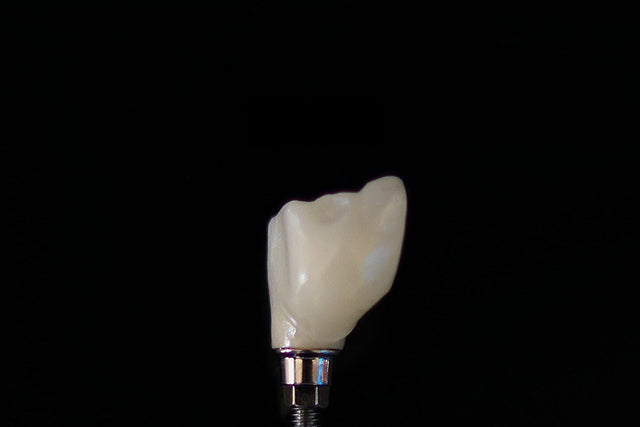
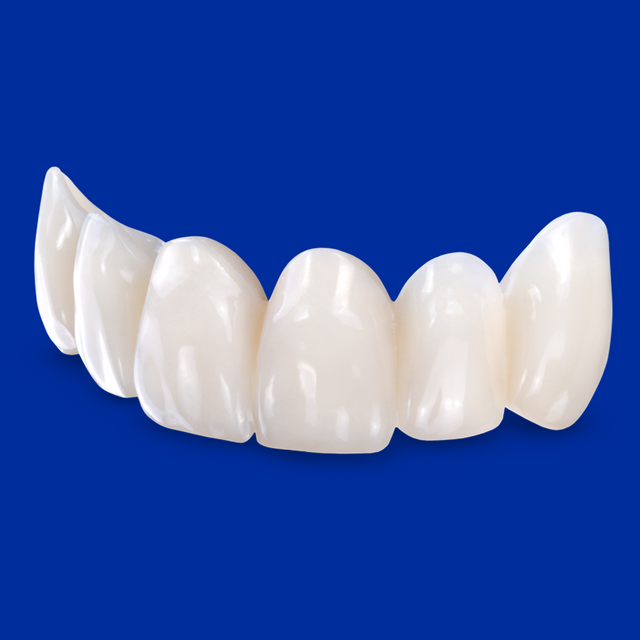
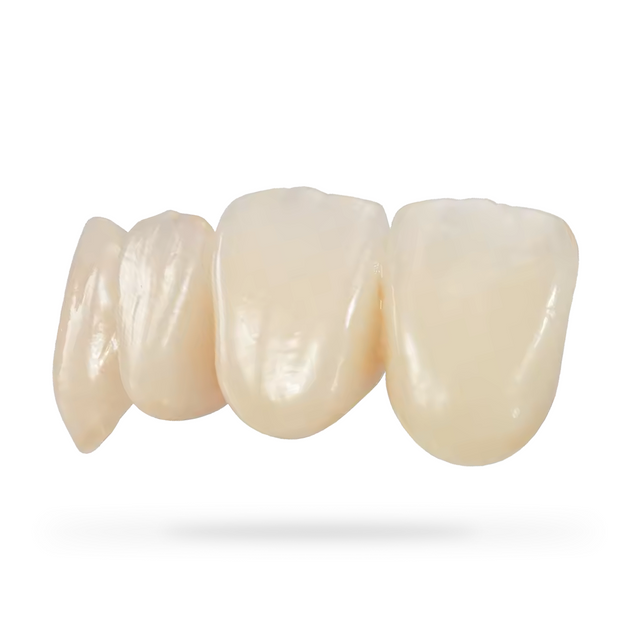
A patient points to a lower molar that hurts when they bite something tough. Under transillumination, a crack across the distal marginal ridge stops the light. The tooth is vital, the radiograph shows nothing, and you have three choices: crown it now, bond an onlay, or chart it and watch.
The AAE's 2008 review noted that the questionable prognosis it gave cracked teeth was not yet based on research evidence. Better data now exists, including a 3-year registry from US practices. Below: crack types, which teeth get worse, onlay versus crown, materials, temporization and what to send the lab.
Key Takeaways
- In the National Dental PBRN Cracked Tooth Registry, 3.0% of 2,601 cracked teeth fractured within 3 years, and about 80% of teeth chosen for monitoring stayed on monitoring.
- Of 478 teeth restored as planned, 14% needed further treatment within 3 years; failures were linked to intracoronal restorations rather than full or partial coverage.
- In a 2024 systematic review of 27 studies, direct restorations without cuspal coverage carried 3.2 times the risk of pulpal complications and 8.1 times the risk of extraction compared with full crowns.
- About 20% of crowned cracked teeth with reversible pulpitis still needed root canal treatment within 6 months (127 patients).
- Root-filled cracked teeth survived 84.1% at 5 years in one meta-analysis; in another, those without a full crown had 11.3 times the extraction risk.
- Ivoclar requires bonding for IPS e.max Press onlays; e.max crowns of at least 1.5 mm may be cemented conventionally.
Quick Answer
Watch a cracked tooth that is symptom-free and caries-free: in the US Cracked Tooth Registry, only 3% of cracked teeth fractured in 3 years, and most teeth chosen for monitoring stayed that way. Cover the cusps when the tooth hurts on biting, the crack involves a cusp or the tooth is root-filled. Full crowns have the strongest survival data for symptomatic and root-filled teeth; bonded onlays save more tooth on weaker evidence.
What Are the AAE Crack Types?
The AAE's 2008 review, Cracking the Cracked Tooth Code, sorts longitudinal fractures into five types: craze lines, fractured cusp, cracked tooth, split tooth and vertical root fracture. The AAE Glossary (10th edition, 2020) now calls a craze line an infraction and defines a cracked tooth as a thin disruption of enamel and dentin of unknown depth and extent. That is the clinical problem: you rarely know how far a crack goes until the tooth is prepared.
| Crack type | Typical approach |
|---|---|
| Craze line (infraction): enamel only | No treatment beyond esthetics; the whole tooth lights up under transillumination |
| Fractured cusp | Remove the cusp; direct or cuspal-coverage restoration (onlay or crown) over the crack margin; endodontics only if the pulp is involved |
| Cracked tooth, no symptoms | Monitor and recall |
| Cracked tooth, vital, symptomatic | Cuspal coverage, sometimes after a band or provisional; about 1 in 5 later need endodontics |
| Cracked tooth with irreversible pulpitis or necrosis | Root canal treatment, then a full crown promptly |
| Split tooth: segments separate | Cannot be saved intact; remove a small segment if the split is not too far apical, otherwise extract |
| Vertical root fracture | Extraction, or root resection or hemisection in multirooted teeth |
Which Cracked Teeth Get Worse?
The National Dental Practice-Based Research Network's Cracked Tooth Registry enrolled 2,858 patients through 209 US dentists, each with a vital posterior tooth showing a visible crack. Its definition, a visible break with no loss of tooth structure, does not distinguish crack depth.
Share of 2,601 cracked teeth that fractured within 3 years in the Cracked Tooth Registry; 91% of those fractures were partial, such as a lost cusp (Hilton et al., 2021; Ferracane et al., 2023).
Most monitored teeth stayed stable
About 80% of teeth recommended for monitoring kept that recommendation for all 3 years. Of teeth still untreated after year one, 12.3% showed crack progression: more cracks or more surfaces involved. Pain often faded: 92% to 99% of teeth with biting or spontaneous pain at enrollment were pain-free at a later recall, treated or not. A 2024 meta-analysis put the success of monitoring at 80% at 3 years and called it an option for symptom-free cracked teeth.
Signs that tip the decision
Biting pain raised the odds that a registry dentist recommended restoration 7.3-fold. In 435 teeth examined after preparation, biting pain, a crack connected to a restoration and a crack extending onto the root each more than doubled the odds of an internal crack in dentin. Later fracture had different predictors: a maxillary tooth, a wear facet through enamel, a crack an explorer catches, and a facial or horizontal crack.
When Does Cuspal Coverage Help?
In the registry, failures were associated with intracoronal restorations, while direct versus indirect, bonded versus non-bonded and build-up versus none were not. The 2024 meta-analysis points the same way: direct restorations without cuspal coverage had more pulpal complications and extractions than full crowns. Coverage also relieves symptoms: in a randomized trial of 40 cracked molars restored with cusp-covering amalgam, chewing pain was gone in all but one tooth at 1 year.
The AAE's 2022 update says all cracked teeth need a crown. The registry authors conclude that dentists were generally good at deciding which teeth to treat and which to monitor.
Onlay or Full Crown?
The studies agree on coverage, not on its form. Tooth removed by each preparation is in our guide to inlays, onlays and crowns.
| Study | Teeth | Finding |
|---|---|---|
| Review of 27 studies | Vital and root-filled cracked teeth | Strongly recommends full crowns for symptomatic and root-filled cracked teeth |
| Study of past cases | 86 teeth restored early, followed 1 to 11 years | Survival 98.6%, 94.9% and 55.9% at 1, 5 and 11 years; onlays linked to more tooth loss than crowns |
| Review of 14 cohort studies | Symptomatic vital cracked teeth | Indirect onlays had better pulp outcomes than crowns; very low certainty |
| Clinical study | 42 painful cracked teeth, bonded pressed glass-ceramic crowns | 95% survival at 10 years; 2 crowns fractured |
| Clinical study | 321 teeth, direct composite with cusp coverage | 94.1% survival at 5 years; root canal treatment a risk factor for loss |
De Toubes and colleagues recommend early full crowns regardless of the direction or number of crack lines. The case for an onlay rests on tooth conservation and on Gavriil's pulp data. Parafunction weighs on the choice too; see Restorations for Bruxers.

Which Material and Cement?
Lithium disilicate
Ivoclar's current IPS e.max Press instructions (Rev. 2, January 2026) make adhesive cementation mandatory for inlays, onlays and partial crowns, with at least 1.0 mm of ceramic. Crowns with at least 1.5 mm occlusally may also take self-adhesive or conventional cement. The instructions list untreated bruxism and temporary cementation under limitations of use. In a 10-year series of 42 cracked teeth with bonded pressed glass-ceramic crowns, survival was 95%.
Zirconia and composite
The cracked-tooth studies compare coverage more than ceramics, so zirconia versus e.max follows the usual factors (see Zirconia vs. E.max). Direct cusp-covering composite kept 94.1% of 321 cracked teeth at 5 years in one practice.
Bonded or conventional
The registry found no link between bonding and failure. In the amalgam trial, bonded restorations reduced cold sensitivity at 3 and 12 months; pin-retained ones did not. Steps are in How to Cement Zirconia and Bond E.max.
Should You Band or Provisionalize First?
The AAE's 2008 review links a better outlook to making the tooth pain-free with a band or temporary crown; its 2022 update says a well-fitted temporary crown may stay until reversible pulpitis settles, and recommends reducing occlusal forces. The staging studies:
- Crown at once: 27 of 127 patients with reversible pulpitis, about 20%, progressed to irreversible pulpitis or necrosis within 6 months (Krell and Rivera, 2007).
- Sedative lining and interim restoration: 80 of 100 teeth avoided endodontic treatment (Abbott and Leow, 2009).
- Orthodontic band first: 76.4% of 106 teeth kept a vital pulp at 1 year; teeth that needed root canal treatment had spent longer in bands (Seet et al., 2024).
- Pain on percussion: pulp survival was 46% with it and 94% without, in a band, splint and crown protocol (Lee et al., 2021).
A 2025 meta-analysis found no difference in 1- or 2-year pulp survival between one-stage and staged treatment, but interim phases of 1 to 2 weeks gave better pulp success than 2 to 3 months, on very low certainty evidence.
What If the Tooth Needs a Root Canal?
Meta-analyses report 88% survival and 82% success at 1 year (7 studies) and 84.1% survival at 5 years (4 studies); Olivieri's review linked a periodontal pocket to more tooth loss. In 363 cracked teeth treated in one US practice, 82% were successful at 1 year; pocket depth, a crack through the distal marginal ridge and the periapical diagnosis mattered most, and Krell and Caplan built them into a prognostic index, the Iowa Staging Index.
The restoration afterward matters. In 200 root-filled cracked teeth from Swedish general practices, survival was 68% at 5 years overall, and significantly higher, 97%, with a full crown than with composite. The 2024 meta-analysis found 11.3 times the extraction risk without a full crown. For molars with little coronal structure, see also Endocrowns.
What Should You Send the Lab?
- Crack map: a photo of the crack under magnification or transillumination, its location on the Rx, and whether it reached the cavity floor.
- Design: onlay or crown, which cusps to cover, and your planned cement. Bonded e.max onlays can be 1.0 mm thick; a conventionally cemented e.max crown needs 1.5 mm.
- Scan: every margin visible, full adjacent teeth and a bite on both sides.
- Parafunction: wear facets and night guard history; the registry linked clenching and grinding to symptomatic cracks.
- Shade: a stump shade if the tooth is dark or root-filled (Shade Matching for the Lab).

Cracked-Tooth Restorations at Elegant Dental Laboratory
- IPS e.max, pressed with IPS e.max Press: inlays and onlays, full-contour and layered crowns, and HO ingots for dark preparations. Zirconia in solid 3Y, 9-layer 5Y and layered options.
- Every case is made in house in Brooklyn by more than 35 technicians, and digital scans are reviewed before production.
- Turnaround from 5 business days on most restorative cases, rush decided case by case, and up to a 7-year warranty on final restorations (policies and warranties).
- Submit a digital case or send a case: our own drivers pick up every business day in all five New York City boroughs and 13 northern New Jersey counties, and UPS labels work anywhere. Call 877-335-5221.
FAQ
Does every cracked tooth need a crown?
The AAE's 2022 newsletter says so. In the Cracked Tooth Registry, most teeth chosen for monitoring stayed on monitoring for 3 years, and a 2024 meta-analysis calls monitoring an option for symptom-free cracked teeth.
Is an onlay enough for a cracked tooth?
Cuspal coverage is what the evidence supports. One review found better pulp outcomes with onlays; a retrospective study found more tooth loss with onlays than crowns. Crowns have stronger data for symptomatic and root-filled teeth.
Will a crown prevent a root canal?
Not always: about 20% of crowned cracked teeth with reversible pulpitis needed one within 6 months in one study.
Can I seat an e.max onlay with self-adhesive cement?
No. Ivoclar requires adhesive cementation for IPS e.max Press inlays, onlays and partial crowns.
Can a split tooth be saved?
Not intact. Per the AAE, if the split is not too far apical, the small segment may be removed and the rest kept; a deep split means extraction.
Sources (24)
- American Association of Endodontists. Cracking the Cracked Tooth Code: Detection and Treatment of Various Longitudinal Tooth Fractures. Endodontics: Colleagues for Excellence, Summer 2008. PDF
- American Association of Endodontists. Cracked Teeth and Vertical Root Fractures: A New Look at a Growing Problem. Endodontics: Colleagues for Excellence, 2022 edition. PDF
- Hilton TJ, et al. Correlation between symptoms and external characteristics of cracked teeth: Findings from The National Dental Practice-Based Research Network. J Am Dent Assoc. 2017;148(4):246-256. doi:10.1016/j.adaj.2016.12.023
- Ferracane JL, et al. Observable characteristics coincident with internal cracks in teeth: Findings from The National Dental Practice-Based Research Network. J Am Dent Assoc. 2018;149(10):885-892. doi:10.1016/j.adaj.2018.06.013
- Hilton TJ, et al. Recommended treatment of cracked teeth: Results from the National Dental Practice-Based Research Network. J Prosthet Dent. 2020;123(1):71-78. doi:10.1016/j.prosdent.2018.12.005
- Hilton TJ, et al. Baseline characteristics as 3-year predictors of tooth fracture and crack progression: Findings from The National Dental Practice-Based Research Network. J Am Dent Assoc. 2021;152(2):146-156. doi:10.1016/j.adaj.2020.09.023
- Ferracane JL, et al. Outcomes of treatment and monitoring of posterior teeth with cracks: three-year results from the National Dental Practice-Based Research Network. Clin Oral Investig. 2022;26(3):2453-2463. doi:10.1007/s00784-021-04211-0
- Funkhouser E, et al. Onset and resolution of pain among treated and untreated posterior teeth with a visible crack: Three-year findings from the National Dental Practice-Based Research Network. J Dent. 2022;119:104078. doi:10.1016/j.jdent.2022.104078
- Ferracane JL, Hilton TJ, Funkhouser E. Lessons learned from the Cracked Tooth Registry: A 3-year clinical study in the Nation's Network. J Am Dent Assoc. 2023;154(3):235-244. doi:10.1016/j.adaj.2022.11.020
- Zhang S, et al. The treatment outcomes of cracked teeth: A systematic review and meta-analysis. J Dent. 2024;142:104843. doi:10.1016/j.jdent.2024.104843
- de Toubes KMS, et al. The Correlation of Crack Lines and Definitive Restorations with the Survival and Success Rates of Cracked Teeth: A Long-term Retrospective Clinical Study. J Endod. 2022;48(2):190-199. doi:10.1016/j.joen.2021.10.010
- Gavriil D, Kakka A, Del Fabbro M. The Effect of Single versus Multiple-stage Restorative Approaches on the Pulp Outcomes of Symptomatic Vital Cracked Teeth: A Systematic Review and Meta-analysis. J Endod. 2025;51(10):1362-1375. doi:10.1016/j.joen.2025.06.013
- Luo XP, et al. A ten-year clinical study of cracked teeth restored with glass ceramic crowns (in Chinese, English abstract). Zhonghua Kou Qiang Yi Xue Za Zhi. 2016;51(10):583-586. doi:10.3760/cma.j.issn.1002-0098.2016.10.002
- Malentacca A, et al. Cuspal Coverage Direct Resin Composite Restorations for Cracked Teeth: A Five-Year Clinical Study. Oper Dent. 2026;51(1):20-35. doi:10.2341/24-172-C
- Davis R, Overton JD. Efficacy of bonded and nonbonded amalgam in the treatment of teeth with incomplete fractures. J Am Dent Assoc. 2000;131(4):469-478. doi:10.14219/jada.archive.2000.0203
- Ivoclar. IPS e.max Press Instructions for Use, Rev. 2, 2026-01-08 (indications, limitations of use, minimum thicknesses, cementation). Ivoclar eIFU
- Krell KV, Rivera EM. A six year evaluation of cracked teeth diagnosed with reversible pulpitis: treatment and prognosis. J Endod. 2007;33(12):1405-1407. doi:10.1016/j.joen.2007.08.015
- Abbott P, Leow N. Predictable management of cracked teeth with reversible pulpitis. Aust Dent J. 2009;54(4):306-315. doi:10.1111/j.1834-7819.2009.01155.x
- Seet RF, et al. Pulp Survival of Cracked Teeth with Reversible Pulpitis after Orthodontic Banding and Coronal Coverage: A Prospective Cohort Study with One Year Follow Up. J Endod. 2024;50(8):1082-1090. doi:10.1016/j.joen.2024.05.006
- Lee J, et al. Survival and prognostic factors of managing cracked teeth with reversible pulpitis: A 1- to 4-year prospective cohort study. Int Endod J. 2021;54(10):1727-1737. doi:10.1111/iej.13597
- Olivieri JG, et al. Outcome and Survival of Endodontically Treated Cracked Posterior Permanent Teeth: A Systematic Review and Meta-analysis. J Endod. 2020;46(4):455-463. doi:10.1016/j.joen.2020.01.006
- Leong DJX, et al. Outcomes of endodontically treated cracked teeth: a systematic review and meta-analysis. Clin Oral Investig. 2020;24(1):465-473. doi:10.1007/s00784-019-03139-w
- Krell KV, Caplan DJ. 12-month Success of Cracked Teeth Treated with Orthograde Root Canal Treatment. J Endod. 2018;44(4):543-548. doi:10.1016/j.joen.2017.12.025
- Nguyen Thi W, Jansson L. Survival rate after endodontic treatment in general dentistry for cracked teeth with different coronal restorations. Acta Odontol Scand. 2021;79(4):256-261. doi:10.1080/00016357.2020.1834615
Reviewed by Gary Fingerman, founder and CEO of Elegant Dental Laboratory, Brooklyn, New York (founded 2007). Last reviewed: October 1, 2026. Study values are from published research, AAE publications or manufacturer instructions; treatment decisions for cracked teeth rest on your own diagnosis of the pulp, the periodontium and the crack.