Tooth regeneration is one of those topics that instantly gets attention. The idea is easy to understand and incredibly appealing: instead of replacing a missing tooth with a prosthetic restoration, what if the body could grow a real one?
It is a powerful idea, and researchers are actively studying it. But there is a big gap between promising laboratory science and something a dentist can offer in everyday clinical practice. As of March 2026, whole-tooth regeneration is not a routine treatment for patients.
Quick answer: Tooth regeneration is scientifically possible in a research sense, but not yet available as a predictable clinical treatment for humans. Researchers have made progress in regenerating certain dental tissues and in studying tooth development in animal models, but growing a complete, functional human tooth inside the mouth is still far more complex than most headlines suggest.
Tooth Regeneration at a Glance
- A real tooth is a complex biological structure, not a single material or tissue.
- Researchers can study tooth development and regenerate some dental tissues in lab settings.
- That is not the same as growing a full, functional human tooth for routine clinical use.
- Animal studies are promising, but they do not automatically translate into predictable treatment for adult humans.
- Today, implants and other restorative solutions remain the most reliable options for replacing missing teeth.
What Does Tooth Regeneration Actually Mean?
The phrase sounds simple, but it can refer to very different things. Sometimes people use it to describe tissue-level repair, such as regenerating pulp or dentin. Other times, they mean something much bigger: growing an entirely new tooth with normal structure, function, and long-term stability.
Those are not the same challenge. Repairing one part of a tooth is a major scientific achievement. Regrowing a complete tooth is a much harder problem.
Regenerating Tissue Is Not the Same as Regrowing a Tooth
A complete tooth is made up of multiple specialized structures that have to develop in coordination. That includes enamel, dentin, pulp, cementum, and the periodontal ligament that connects the tooth to the surrounding bone.
For regeneration to work in a real clinical setting, all of those parts would need to form correctly, integrate with the jaw, align with the bite, and remain functional over time.
Lab-Grown Teeth Do Not Mean Ready-to-Place Teeth
When researchers or media outlets talk about lab-grown teeth, they are usually referring to early-stage biological models, tissue constructs, or tooth-germ research. These are important scientific tools, but they are not the same as a fully developed replacement tooth that can be placed into a patient’s mouth like an implant or crown.
Why Growing a Real Human Tooth Is So Difficult
Tooth regeneration is challenging because a tooth is not just a hard white structure. It is a living biological organ with a highly organized developmental process.
A Tooth Has to Develop as a System
Natural tooth formation depends on tightly controlled signaling between different cell types during development. These interactions help determine shape, root formation, eruption, tissue differentiation, and integration with surrounding structures.
Recreating that process in an adult human mouth is extremely difficult. It is not just about stimulating growth. It is about controlling a sequence of biological events with precision.
Adult Biology Is Different From Early Development
One of the biggest scientific barriers is that the biological environment that supports tooth development is active during early developmental stages, not in the same way in adult patients. Even when stem cells are involved, researchers still face the problem of directing those cells to form the right structures at the right time and in the right place.
Function Matters as Much as Formation
A regenerated tooth would need more than the right shape. It would need to handle occlusal force, respond to the surrounding bone and soft tissue, and ideally function with the support of a healthy periodontal ligament. That level of integration is one of the reasons this field remains experimental.
Why Headlines About New Teeth Often Overstate Progress
Public excitement around regenerative dentistry is understandable, but headlines often blur the line between early scientific progress and actual patient-ready treatment.
A study showing tissue formation in a lab or success in an animal model can be meaningful and exciting without meaning that dentists are about to offer tooth regrowth as a standard procedure. Those are very different milestones.
| Research Result | What It Means | Why It Does Not Equal Routine Treatment Yet |
|---|---|---|
| Dental tissue regeneration | Researchers can regenerate or repair parts of dental structures | It does not create a complete functional tooth |
| Lab-grown tooth models | Scientists can study early tooth development in controlled settings | These are not ready-made teeth for patient use |
| Animal model success | Proof of concept is possible in some species | Human treatment requires far more validation, control, and safety data |
Can Humans Regrow Teeth Today?
No, not as a standard clinical treatment. At this point, there is no widely available dental procedure that allows an adult patient to regrow a complete natural tooth on demand.
That does not mean the science is stalled. It means the field is still moving through the difficult stages between biological possibility and predictable patient care.
Are Scientists Making Real Progress?
Yes, but the progress is more nuanced than many articles suggest. Research in stem cells, developmental signaling, tissue engineering, and bioengineered tooth structures continues to move forward. Scientists are learning more about how teeth form, how certain dental tissues can be regenerated, and what might eventually make biologic tooth replacement possible.
That progress matters. It just should not be confused with a near-term replacement for current restorative care.
Will Tooth Regeneration Replace Implants Anytime Soon?
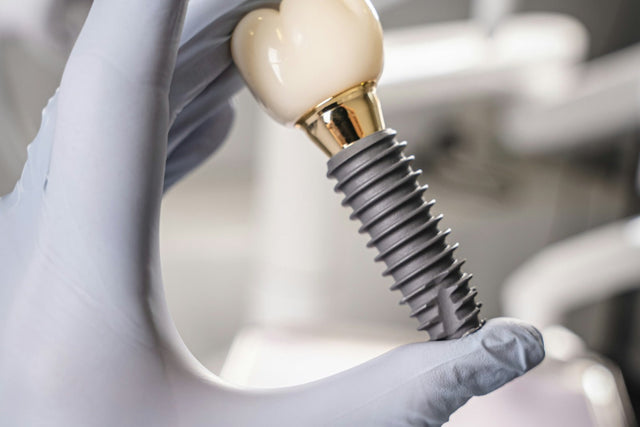
Not likely in the near future. Dental implants remain the most predictable and clinically established option for replacing missing teeth today. They are supported by extensive evidence, clear treatment protocols, and long-term clinical experience.
A fully regenerated tooth would offer biological advantages if it ever became practical, but that future therapy would still need to prove safety, consistency, function, and long-term success before it could replace established treatment standards.
What Can Patients and Dentists Rely on Right Now?
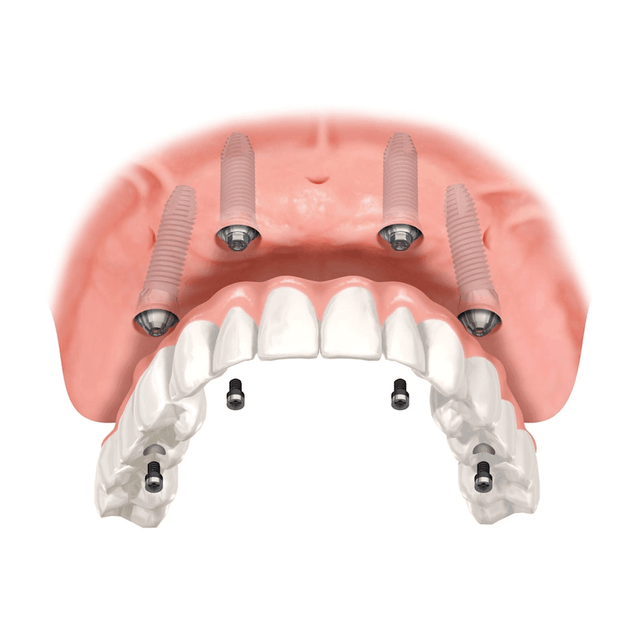
Right now, patients need solutions that work in the real world, not just in theory. Crowns, bridges, implants, implant-supported restorations, and other proven prosthetic approaches remain the standard because they deliver predictable function and esthetics today.
That is not a failure of innovation. It is simply the reality that good dentistry depends on treatments that are both scientifically sound and clinically reliable.
Final Thoughts
Tooth regeneration is one of the most exciting areas in dental research, and it deserves the attention it gets. The field is advancing, and the science behind it is real.
But patients and clinicians are best served by a clear-eyed view of where things stand. Tooth regeneration is not a routine treatment option today. For now, the most dependable path is still thoughtful treatment planning built around proven restorative solutions.
FAQ
Is tooth regeneration possible in humans today?
Not as a routine clinical treatment. Researchers are making progress in regenerative dentistry, but fully regrowing a functional human tooth is not something dentists can reliably offer in everyday practice today.
Are scientists really growing teeth in labs?
Researchers can create early-stage tooth models and study tooth development in laboratory settings, but that is not the same as producing a complete, ready-to-use human replacement tooth.
Why is it so hard to regrow a tooth?
A tooth is a complex biological structure made of multiple tissues that must develop in the right sequence and integrate with bone, soft tissue, and occlusion. That level of control is extremely difficult to reproduce in adult humans.
Will tooth regeneration replace dental implants?
Not anytime soon. Implants remain the most predictable and well-established treatment for replacing missing teeth, while tooth regeneration is still largely in the research stage.
What is the best option for missing teeth right now?
That depends on the case, but current reliable options include implants, crowns, bridges, and implant-supported restorations. These remain the practical standard because they are proven, available, and clinically predictable.
Need a Predictable Solution Today?
Tooth regeneration is an exciting field, but it is not a routine clinical option today. If your patient needs a reliable, esthetic, and functional restorative solution now, our lab can help.