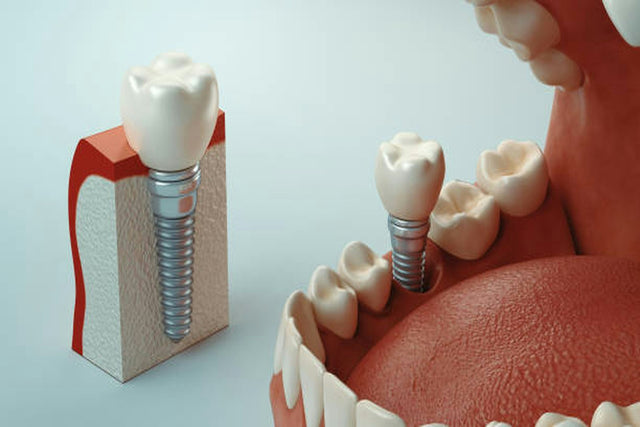
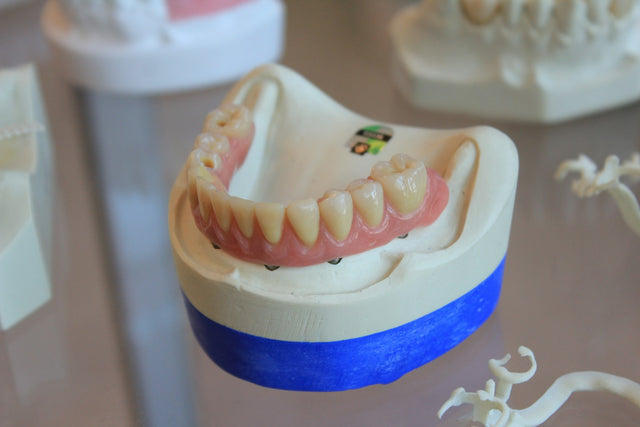
The lower denture is the one patients complain about. It lifts when they talk, food gets under it, and every reline buys a few months. Suggest implants and the questions come fast: how many, which attachment, and can the old denture be used?
Below: what the McGill and York statements actually said, what patients gain, how attachment systems compare on retention loss and maintenance, why the maxilla needs more implants, and what to send the lab.
Key Takeaways
- The McGill (2002) and York (2009) consensus statements name the two-implant overdenture the first choice for the edentulous mandible; York calls it the minimum to offer.
- In a meta-analysis of 25 randomized trials, 2.0% of implants and 4.2% of overdentures failed; prosthetic complications were lowest with LOCATOR and 7.4 times higher with magnets.
- A Cochrane review of 6 trials (294 mandibular overdentures) could not determine a preferred attachment system; ball attachments needed more repairs than bars, on very low-quality evidence.
- In a review of 45 studies, retention loss from wear was the most common reason for attachment maintenance.
- For the edentulous maxilla, a 2026 global consensus report says the literature supports four or more implants.
- A clinical report puts minimum vertical space at 13 to 14 mm for a bar overdenture and 8 to 10 mm for a locator-retained one.
Quick Answer
For most edentulous mandibles, start with two implants and unsplinted stud (locator-type) attachments. The McGill and York statements make the two-implant overdenture the first-choice minimum, implants and overdentures survive well with any attachment, and randomized trials show the fewest prosthetic complications with LOCATOR. Choose a bar when the implants diverge beyond what the stud system corrects and there is enough vertical space. An upper overdenture is a different plan: four or more implants.
What Did the McGill and York Statements Actually Say?
In 2002, an expert panel at McGill University in Montreal stated that restoring the edentulous mandible with a conventional denture "is no longer the most appropriate first choice prosthodontic treatment," and that there is now "overwhelming evidence that a two-implant overdenture should become the first choice of treatment" for the edentulous mandible (quoted in Thomason et al., 2012).
The 2009 York statement, from the British Society for the Study of Prosthetic Dentistry, went further: a conventional lower denture "is a much poorer alternative," and a two-implant overdenture "should be the minimum offered to edentulous patients as a first choice of treatment." On cost, it noted that two implants keep the initial cost to a minimum and that, spread over the patient's life span, the annual difference is relatively small.
A 2012 review of both statements puts it well: not the gold standard of implant therapy, but a minimum standard sufficient for most people (history in Dentures Then and Now).
How Much Do Patients Actually Gain?
York cites significantly greater satisfaction and quality of life, much of it from randomized trials. Pooled numbers are positive but more cautious:
- A 2009 meta-analysis found implant overdentures more satisfying than new conventional dentures at a clinically relevant level (pooled effect size 0.80), but with high heterogeneity, no significant effect on oral health-related quality of life and an uncertain magnitude (Emami et al., 2009).
- A 2018 meta-analysis of 14 trials in patients averaging 65 or older found significant gains in satisfaction, oral health-related quality of life and chewing ability, on moderate to low-quality evidence (Kroll et al., 2018).
- In dependent patients aged about 85, converting existing lower dentures to two-implant overdentures beat relines for satisfaction and quality of life (Müller et al., 2013).
Locator-Type, Ball, Bar, Magnet or Telescopic: How Do They Compare?
Survival does not separate the systems: it was high with every attachment (Prasad et al., 2024). Maintenance and complications do.
Stud (locator-type) attachments
A nylon insert in a metal housing snaps over a low abutment. Zest's manual offers inserts from zero to regular retention and claims standard inserts handle up to 20 degrees of divergence between two implants and extended-range inserts up to 40; its R-Tx brochure claims 30 degrees per implant. Studs start with higher retention than balls, but their plastic inserts wear faster (Wakam et al., 2022); maintenance is mainly replacing inserts after retention loss (Miler et al., 2017). Compared with balls, studs needed less matrix activation and fewer new overdentures and gave higher satisfaction (Girundi et al., 2024). Not every trial agrees: in one 60-patient trial, the LOCATOR group logged 34 prosthetic complications in year one, mostly for retention loss, a higher maintenance rate than balls (Kleis et al., 2010).
Ball attachments
More cost-effective than locators in one review (Gupta et al., 2023), but worn or loose matrices were more common after the first year (Cehreli et al., 2010), and balls needed more repairs than bars (Payne et al., 2018).
Bars
A bar splints the implants. Like telescopic crowns, it can compensate for divergent implants and gives a distinct path of insertion (Stilwell et al., 2026). Bar-reinforced overdentures had fewer base fractures but more hygiene-related maintenance, while studs had more component replacement (Joseph et al., 2026). In maxillary studies, inflammation was greater beneath bars, and solitary attachments needed more maintenance (Sadowsky and Zitzmann, 2016).
Magnets and telescopic crowns
Magnets had 7.4 times more prosthetic complications than other attachments, while telescopic and conical crowns ranked second-best after LOCATOR (Prasad et al., 2024). In one 69-patient trial, 5-year maintenance cost about 247 euros more with magnets than with balls, on very low-quality evidence (Payne et al., 2018).
| Attachment | Retention | Maintenance | Space needed | Evidence |
|---|---|---|---|---|
| Stud (locator-type) | Nylon inserts in several retention levels (manufacturer); higher initial retention than ball, faster wear | Insert replacement for retention loss; fewest prosthetic complications in an RCT meta-analysis | Least: 3.17 mm total attachment height (Zest claim); 8 to 10 mm minimum overall (clinical report) | Favored by RCT meta-analyses; one RCT found more maintenance than ball |
| Ball | Lower initial retention than cylindrical studs | More matrix activation and new overdentures than studs; more repairs than bars | Varies by system; check the manufacturer's height | Many trials; more cost-effective in one review |
| Bar (splinted) | Clips or attachments on the bar; one path of insertion | Fewer base fractures, more hygiene maintenance; more inflammation beneath bars | Most: 13 to 14 mm minimum (clinical report) | Fewer repairs than ball (Cochrane, very low quality) |
| Magnet | Magnetic attraction between a keeper and a magnet in the denture | 7.4 times more prosthetic complications; higher 5-year maintenance cost than ball | Not compared in the reviews used | Least favorable for maintenance |
| Telescopic or conical crown | Primary and secondary copings with a distinct path of insertion; compensates divergence | Second fewest prosthetic complications | Not compared in the reviews used | Few trials; 1 trial of 22 patients against ball |
How Much Vertical Space Does Each Option Need?
Ahuja and Cagna classify vertical restorative space, soft tissue crest to planned occlusal plane, from Class I (15 mm or more) to Class IV (under 9 mm), and stress measuring it before implant placement. A clinical report gives 13 to 14 mm as the minimum for a bar overdenture and 8 to 10 mm for a locator-retained one (Goo and Tan, 2017). Zest claims a 3.17 mm total LOCATOR attachment height (male plus 1 mm collar abutment, external hex), with 1.5 mm of abutment above the gingiva for the denture cap.
How Many Implants, and Where?
Mandible: two remains the baseline
A 2026 review of 12 trials (517 participants) found similar survival, bone loss and satisfaction with a single midline implant, but not enough data to make one implant the universal minimum (Tudts et al., 2026); a 2025 meta-analysis of 17 trials found more fractures, remakes and housing reattachments with one (Koyama et al., 2025).
Position matters. In a 3-year trial of 90 patients with two LOCATOR-retained implants, lateral incisor sites gave the least bone loss, canine sites the lowest plaque and gingival scores, and premolar sites the highest retention and satisfaction (Raafat et al., 2026). Stud systems typically correct only about 15 to 25 degrees of divergence (Stilwell et al., 2026).
Maxilla: plan four or more
Implants for a maxillary overdenture, splinted by a bar or unsplinted with studs or telescopic crowns, per the 2026 global consensus report on the edentulous maxilla (Stilwell et al., 2026).
Implant survival appeared higher with four or more implants, though overdenture survival and satisfaction did not depend significantly on implant number (Di Francesco et al., 2019). In a review of 1,478 maxillary overdentures, patients with fewer implants per prosthesis had more prosthesis failures (Ghiasi et al., 2021). Four splinted implants were not inferior to six (Di Francesco et al., 2021). The consensus also suggests metal reinforcement, preferably with an open palatal design, and choosing the retention element by implant position and interocclusal space.
What Maintenance Should Patients Expect?
Retention loss from wear is the most common reason for maintenance (Wakam et al., 2022). Maxillary studies add relining and base fractures; beyond five years, prosthesis success (55.0% to 90.0%) ran below implant success (78.2% to 95.0%) (Stilwell et al., 2026). No source here sets a fixed insert interval; the consensus recommends recalls by risk profile.
Zest tells patients to seat the overdenture with both hands, not by biting, to soak it in cleanser for 15 minutes or less, and never to use bleach. Build insert changes and relines into the treatment plan.
Convert the Existing Denture or Make a New One?
Both work. Zest describes a direct technique, picking up housings chairside, and an indirect one, an impression with copings sent to the laboratory. In the trial of very old adults, converted dentures still beat relines (Müller et al., 2013).
Convert when the denture fits, the vertical dimension and tooth positions are right, and there is enough acrylic over the abutments. If it is worn, thin or relined repeatedly, a new denture designed around the attachments is the better investment, since base and framework repairs are common maintenance events (Joseph et al., 2026). For a fixed alternative, see Full-Arch Zirconia vs PMMA vs Hybrid.

What to Send the Lab
- Implants: system, platform and position of each implant, and any angulation you measured.
- Attachments: brand, abutment and cuff height, and which inserts (standard or extended range) to process.
- Records: impression with copings and analogs, bite record at the correct vertical dimension, tooth mold and shade.
- Maxilla: palatal coverage preference and any reinforcement requested.
More on the form in How to Fill Out a Dental Lab Rx.

Overdentures at Elegant Dental Laboratory
- Full-service lab at 2308 McDonald Ave, Brooklyn, NY, founded in 2007 by Gary Fingerman: more than 35 technicians in a 7,000 sq. ft. facility make every case in house, with no outsourcing.
- Dentures and removables: implant overdentures on LOCATOR, Novaloc, Equator or ball attachments, with the housings picked up in our lab, and bar overdentures on four or more implants; complete, immediate and duplicate dentures, processed conventionally on printed or stone models. We accept intraoral scans for complete dentures and keep the design files.
- Implant restorations with design libraries for all major implant systems, including full-arch and replacing all teeth on hybrid prostheses.
- Digital scans are reviewed before production. Submit a digital case or send a case: free pickup and delivery by our own drivers in all five New York City boroughs and 13 northern New Jersey counties, and UPS labels for practices anywhere. Call 877-335-5221.
FAQ
Is the two-implant overdenture the standard of care?
McGill (2002) and York (2009) call it the first choice for the edentulous mandible: a minimum standard, not the gold standard.
Locator-type or ball attachments?
Meta-analyses favor studs for satisfaction and less aftercare; balls are more cost-effective. Cochrane could not name a preferred system.
When is a bar worth it?
When implants diverge beyond what studs correct and there is about 13 to 14 mm of vertical space. Expect fewer base fractures, more hygiene maintenance.
How many implants does an upper overdenture need?
Four or more, according to the 2026 global consensus report on the edentulous maxilla.
How often are inserts replaced?
No fixed interval is established. Set recalls by risk and check retention at each visit.
Can the patient's existing denture be converted?
Yes, if it fits and the bite and tooth positions are right; in very old adults, converted dentures beat relines.
Sources (29)
- Feine JS, Carlsson GE, Awad MA, et al. The McGill consensus statement on overdentures. Mandibular two-implant overdentures as first choice standard of care for edentulous patients. Gerodontology. 2002;19(1):3-4. PubMed 12164236
- Thomason JM, Feine J, Exley C, et al. Mandibular two implant-supported overdentures as the first choice standard of care for edentulous patients: the York Consensus Statement. Br Dent J. 2009;207(4):185-186. doi:10.1038/sj.bdj.2009.728
- Thomason JM, Kelly SA, Bendkowski A, Ellis JS. Two implant retained overdentures: a review of the literature supporting the McGill and York consensus statements. J Dent. 2012;40(1):22-34. doi:10.1016/j.jdent.2011.08.017
- Das KP, Jahangiri L, Katz RV. The first-choice standard of care for an edentulous mandible: a Delphi method survey of academic prosthodontists in the United States. J Am Dent Assoc. 2012;143(8):881-889. doi:10.14219/jada.archive.2012.0292
- Emami E, Heydecke G, Rompré PH, de Grandmont P, Feine JS. Impact of implant support for mandibular dentures on satisfaction, oral and general health-related quality of life: a meta-analysis of randomized-controlled trials. Clin Oral Implants Res. 2009;20(6):533-544. doi:10.1111/j.1600-0501.2008.01693.x
- Kroll P, et al. Oral health-related outcomes in edentulous patients treated with mandibular implant-retained dentures versus complete dentures: systematic review with meta-analyses. J Oral Implantol. 2018;44(4):313-324. doi:10.1563/aaid-joi-D-17-00210
- Müller F, et al. Implant-supported mandibular overdentures in very old adults: a randomized controlled trial. J Dent Res. 2013;92(12 Suppl):154S-160S. doi:10.1177/0022034513509630
- Payne AG, et al. Interventions for replacing missing teeth: attachment systems for implant overdentures in edentulous jaws. Cochrane Database Syst Rev. 2018;10:CD008001. doi:10.1002/14651858.CD008001.pub2
- Prasad S, et al. Attachment systems for mandibular implant-supported overdentures: a systematic review and meta-analysis of randomized controlled trials. J Prosthet Dent. 2024;132(2):354-368. doi:10.1016/j.prosdent.2022.08.004
- Girundi ALG, et al. Patient-reported outcome measures and clinical performance of implant-retained mandibular overdentures with stud and ball attachments: a systematic review and meta-analysis. J Prosthet Dent. 2024;131(2):197-211. doi:10.1016/j.prosdent.2022.02.006
- Wakam R, et al. Evaluation of retention, wear, and maintenance of attachment systems for single- or two-implant-retained mandibular overdentures: a systematic review. Materials (Basel). 2022;15(5):1933. doi:10.3390/ma15051933
- Miler AMQP, et al. Locator attachment system for implant overdentures: a systematic review. Stomatologija. 2017;19(4):124-129. PubMed 29806650
- Gupta N, Bansal R, Shukla NK. The effect of ball versus locator attachment system on the performance of implant supported overdenture: a systematic review. J Oral Biol Craniofac Res. 2023;13(1):44-55. doi:10.1016/j.jobcr.2022.11.001
- Kleis WK, et al. A comparison of three different attachment systems for mandibular two-implant overdentures: one-year report. Clin Implant Dent Relat Res. 2010;12(3):209-218. doi:10.1111/j.1708-8208.2009.00154.x
- Cehreli MC, et al. Systematic review of prosthetic maintenance requirements for implant-supported overdentures. Int J Oral Maxillofac Implants. 2010;25(1):163-180. PubMed 20209199
- Joseph M, et al. Clinical performance and prosthetic outcomes in reinforced implant-supported overdentures: a systematic review. J Prosthet Dent. 2026 (online ahead of print). doi:10.1016/j.prosdent.2026.08.007
- Stilwell C, et al. Consensus report of Group 4 of the 1st Global Consensus for Clinical Guidelines for the Rehabilitation of the Edentulous Maxilla: conventional dentures, implant overdentures and implant-supported fixed dental prostheses. Clin Oral Implants Res. 2026;37(Suppl 30):S81-S107. doi:10.1111/clr.70069
- Di Francesco F, et al. The number of implants required to support a maxillary overdenture: a systematic review and meta-analysis. J Prosthodont Res. 2019;63(1):15-24. doi:10.1016/j.jpor.2018.08.006
- Ghiasi P, Ahlgren C, Larsson C, Chrcanovic BR. Implant and prosthesis failure rates with implant-supported maxillary overdentures: a systematic review. Int J Prosthodont. 2021;34(4):482-491. doi:10.11607/ijp.6905
- Di Francesco F, et al. Patient satisfaction and survival of maxillary overdentures supported by four or six splinted implants: a systematic review with meta-analysis. BMC Oral Health. 2021;21(1):247. doi:10.1186/s12903-021-01572-6
- Sadowsky SJ, Zitzmann NU. Protocols for the maxillary implant overdenture: a systematic review. Int J Oral Maxillofac Implants. 2016;31 Suppl:s182-s191. doi:10.11607/jomi.16suppl.g5.2
- Tudts M, et al. A comparison between mandibular overdentures retained by a single midline implant and by two implants: a systematic review. J Prosthet Dent. 2026;135(5):e71-e78. doi:10.1016/j.prosdent.2025.10.048
- Koyama R, et al. Single versus two implant-supported mandibular overdentures: a systematic review and meta-analysis of implant survival and prosthetic complications. Int J Implant Dent. 2025;11(1):60. doi:10.1186/s40729-025-00647-1
- Raafat MH, Mourad KE, Elsyad MA. Effect of implant position on clinical outcomes of two implant overdentures: a 3-year randomized clinical trial. BMC Oral Health. 2026;26(1):866. doi:10.1186/s12903-026-08441-0
- Ahuja S, Cagna DR. Classification and management of restorative space in edentulous implant overdenture patients. J Prosthet Dent. 2011;105(5):332-337. doi:10.1016/S0022-3913(11)60064-4
- Goo CL, Tan KB. Fabricating CAD/CAM implant-retained mandibular bar overdentures: a clinical and technical overview. Case Rep Dent. 2017;2017:9373818. doi:10.1155/2017/9373818
- Zest Dental Solutions. LOCATOR Implant Attachment System Technique Manual, L8030-TM Rev F, 12/2024 (insert ranges, cuff height, processing techniques, patient care). PDF
- Zest Dental Solutions. LOCATOR brochure, L9746 Rev B, 05/2022 (attachment height). PDF
- Zest Dental Solutions. LOCATOR R-Tx brochure, L9721 Rev F, 03/2022 (angle correction). PDF
Reviewed by Gary Fingerman, founder and CEO of Elegant Dental Laboratory, Brooklyn, New York (founded 2007). Last reviewed: October 1, 2026. Study values are from published research; attachment specifications are manufacturer claims. Always follow the current instructions for use of the attachment system you place.